
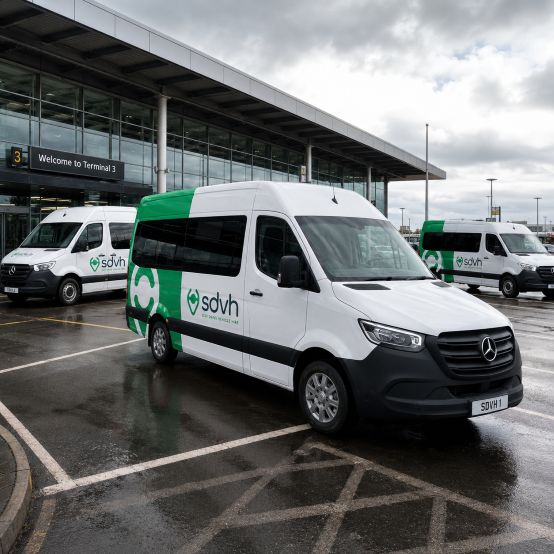









Planning seats, bags and drivers for a group
Give the confirmed passenger number rather than a best guess. List luggage, sports kit or equipment separately, because a full seat count can leave little room for bags. Agree one clear meeting point for the group before travel. Share the intended driver's age and licence details when you enquire, so the team can check eligibility for the size of minibus before quoting.
How the right vehicle is confirmed
Base your choice on how many passengers are travelling, the luggage and who is eligible to drive. Smaller groups may be well served by a 7 or 9-seater, whereas 12, 15 and 17-seat vehicles call for closer checks on licence, age and luggage space. The range includes the Vauxhall Zafira 5 + 2, Galaxy 7 Seater Manual, Galaxy 7 Seater Automatic, 9 Seater Manual and 9 Seater Automatic, depending on dates, driver details and availability. Make, model, transmission, seating, payload and licence position are all confirmed when you are quoted, so treat the vehicles listed as a guide to the kind of hire on offer, not a guaranteed reservation of a particular model.
Agreeing a meeting point with your group
Where will everyone assemble, and at what time? Settle both questions early and in writing, because a vague meeting arrangement is the most common reason a group departure runs late. Choose a spot that every passenger knows and can reach easily, then state the time you aim to leave rather than the time people should arrive. Send the details to the whole group in a single message and ask for replies so you can see who has not seen it. Assign someone to take a headcount at the pickup point before departure. If any passengers are joining partway along the route, agree those stops in advance and note them against your timings. Passing the meeting arrangements to the team when you enquire keeps the day's schedule coherent.
Planning comfort breaks on longer trips
On a journey of several hours, breaks are worth scheduling deliberately rather than leaving to chance. Sketch out roughly where you would like to stop, how long each break will run, and whether any passengers have specific needs, such as frequent stops or a particular meal time. Share the draft schedule with the group so expectations are set before you leave, and invite suggestions while the plan is still flexible. Build in a margin around any fixed deadline, since a scheduled break that overruns should not put your arrival at risk. Note that some passengers may prefer fewer stops to reach the destination sooner, so a quick consensus beforehand saves debate on the day. Mentioning your intended break pattern when you enquire helps the timing work on paper as well as in practice.
Explore other minibus hire areas
Things to check before booking
Ahead of confirming the hire, go over the key points: whether the vehicle is available, what the driver needs, mileage, insurance, delivery or collection arrangements and any extras you have asked for. The number of passengers, luggage, driver age, licence entitlement and any D1 requirement should all be checked before the minibus is confirmed. A clear enquiry gives the date, length of hire, rough route, delivery or pickup address, expected passengers or load, and any special requirements that might affect whether a vehicle is suitable.