
Semi-Automatic Cars Explained: Scotland Hire Notes
A semi-automatic car has no clutch pedal, although depending on the model the driver may still be able to influence gear selection. This regional version uses Aberdeen, Airdrie and Alloa as example locations for SDVH Scotland customers.
What semi-automatic means
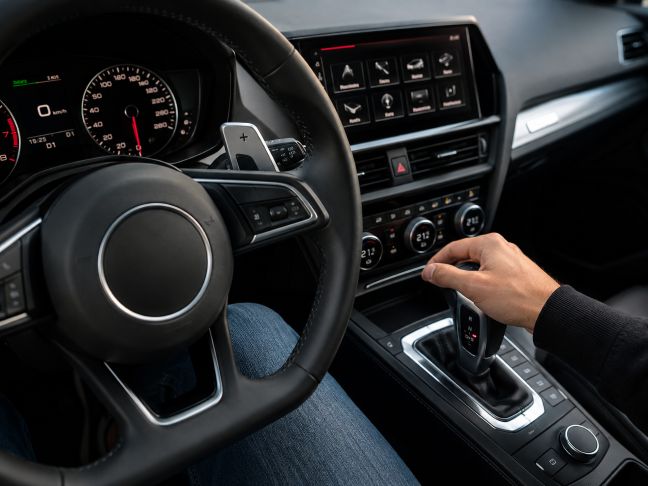
Unlike a conventional manual, a semi-automatic car has no clutch pedal for the driver to use. Depending on the model, you may be able to pick gears with paddles, a gear selector or a manual-style mode, while the car looks after the clutch. For bookings in Aberdeen, Airdrie or Alloa, SDVH Scotland needs the same practical details: passenger numbers, luggage, access, delivery or collection, and the route ahead.
For most people hiring in Scotland, the key point is straightforward: driving one usually feels more like an automatic than a manual, but you should have the controls and modes explained before setting off.
What it is like to drive
In traffic, a semi-automatic can take away much of the effort of constant clutch work. That helps in slow conditions across Scotland, at roundabouts, in queues and in car parks, where a manual can become tiring. Customers around Aberdeen, Airdrie and Alloa often use the vehicle for varied local trips, so choose the category by what you are carrying rather than by its name alone.
Certain gearboxes behave differently at low speed. Spend the first few minutes getting used to creep, hill starts, reverse, park mode and the way the selector responds.
Licence questions
Which licence rules apply depends on how the vehicle and its gearbox are classified. If you hold an automatic-only licence, tell the booking team before the car is confirmed, and check rather than assume that all clutchless cars are treated alike.
If you are adding several drivers to the hire, every driver's licence has to match the vehicle booked. This is especially important for replacement cars and family trips where different people may take the wheel.
When it works for Scotland hire
Because the driver has fewer gear changes to think about, semi-automatic or automatic-style cars can be a good match for airport runs, business appointments, city parking and routes you do not know.
They can also suit customers who want an easier drive but still prefer a car-sized vehicle to a larger people carrier, estate or van.
Checks to make before delivery or collection
Find out how to select drive, reverse, park and manual mode, and whether the car uses paddles or a conventional selector. You should also confirm the mileage, cover, delivery and collection arrangements, plus any deposit or excess terms.
Mention on the booking call if your route takes in central Scotland, airports, stretches of motorway or tight parking, so the vehicle category can be properly checked.
Using this guide before you call
Use these Scotland hire notes on semi-automatic cars as a first filter before you phone. They are there to help you settle on a vehicle type, but availability, the driver and the terms all still need checking before the booking is complete.
Note down the route, hire date, number of passengers, size of the luggage or load, preferred transmission and the delivery or collection address. These details count for more than a broad label such as car hire, particularly when the vehicle needs to suit a specific job.
When another vehicle category is worth comparing
If your plans change, compare what this guide covers with the wider car hire services. Someone asking about a car body style may in fact need more luggage space, while someone asking about a small van might really need a longer load bay or a tail-lift option.
The most reliable booking conversation begins with the job rather than the name of the vehicle. A light family trip, a station pickup, a student move, a trade delivery and an event run may each lead to a different vehicle, even if the initial search term sounds much the same.
Checking local availability and routes
Once you know where the vehicle is needed, the local hire areas become useful. They set out nearby places, roads, stations and related service links, helping the booking team understand the journey you are actually making.
If the vehicle is being delivered or collected, give the full address and mention any restrictions such as parking, loading bays, timed access, height limits, gated entrances or event traffic, as these can affect whether the vehicle you have requested is practical.
Checklist before phoning the booking team
Before you phone, work out who will drive and what licence they hold, then check whether an automatic is needed, whether the trip requires European cover, whether you are requesting one-way hire and whether company own insurance may apply.
With vans and trucks, include the payload, how the vehicle will be loaded, any tail-lift needs and site access. With cars and minibuses, include the number of passengers, luggage, child seats, pickup points and any long-distance plans. A clearer request means the quote can be less generic.
What a vehicle name does not tell you
A vehicle label is a useful place to start, but it is no guarantee of exact dimensions, equipment, transmission, seating, load space or model. Vehicles with similar names may still vary in boot shape, roof height, payload, doors or licence requirements.
That is why this guide points you to a phone check rather than a one-click booking promise. The booking team can confirm what is available on your chosen date and whether the vehicle still suits your actual route, driver and load.